
Listen to the podcast above or scroll down to read!
Protein for Women in Midlife: Why It Matters More Than You Think
If you’ve been on the internet for more than five minutes, you’ll have seen it. Protein is everywhere.
Protein powders. Protein snacks. Protein goals. And if you’re a woman in midlife, it can feel like you’re being told to suddenly eat like a gym bro and lift weights every day. So let’s just pause for a second.
Because underneath the noise, there is something important here. But it’s not about extremes or perfection, it’s about understanding what your body actually needs right now.
Why Your Body Changes in Midlife (and Why Protein Matters)
Most women don’t realise this, but we start losing muscle mass from our 30s onwards. Not dramatically overnight but gradually and consistently.
By the time you reach your 40s and 50s, your body composition is often shifting. You might weigh the same (or have gained weight), but what’s happening underneath is different. Often, if there is no intervention there will be less muscle and more fat.
And this matters because muscle isn’t just about how you look. It’s about:
- your metabolism
- your energy
- your strength
- your ability to stay independent and well as you age
Protein is one of the key nutrients that helps you maintain that muscle, not the only factor, but a really important one I want to dive into.
What the Research in Women Actually Shows
One of the most interesting pieces of research comes from the Nurses Health Study, which followed women over decades. This study looked at protein intake in midlife and how those women aged later on. And what they found was simple but powerful:
Women who ate more protein in midlife were more likely to experience healthy ageing.
That included:
- better physical function
- better mental health
- lower risk of chronic disease
Importantly, this study didn’t look at weight or body fat. It looked at how well women functioned as they got older.
And that’s the real goal, isn’t it? Not just losing weight but feeling strong, capable, and well in your body so you can live your one precious and beautiful life.
Protein, Fat Loss and Body Composition
There’s also research looking more directly at body composition, a systematic review in the American Journal of Clinical Nutrition found that higher protein diets were associated with:
- greater fat loss
- better preservation of lean muscle
And this is where things get interesting, because you might not gain weight in midlife (although on avg most men and women do), but your body composition can still change. You can lose muscle and gain fat without the scale shifting much at all and that’s often what women are noticing.
Clothes fit differently. Energy feels lower and for a lot of women – hunger levels increase. Protein helps shift that.
Not on its own. But as part of a bigger picture, it’s one of the simplest levers you can pull.
How Much Protein Do You Actually Need?
This is where things can get confusing online, and some personalisation is helpful. I am going to give some general umbrella goals but each person is different.
What I tend to focus on with clients in Flourish or in my one to one clinic is simplicity – where possible – in terms of increasing protein, by focusing on meals and with each meal asking ‘where’s the protein?’ and aiming for about 30g of protein per meal.
That alone will often take you from under-eating protein to eating enough to support your body. and more importantly, it’s practical. It can look like:
- adding eggs or greek yogurt to breakfast
- making sure lunch isn’t just carbs
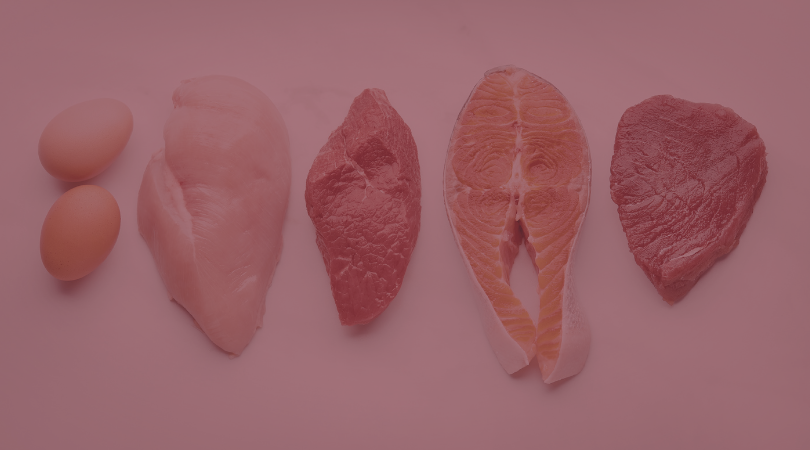
- building meals around a protein source like salmon, lentils, chicken or tofu
Not perfection but some intention around protein with each meal.
For me personally with aiming to build more muscle and prevent midlife weight gain I aim for 0.7g of protein per pound of body weight so I am eating more than this (the goal is 140g a day right now) but I start with the basics first and hitting 30g per meal is a good place to start and build on – if needed.
A Final Note (That Actually Matters Most)
Protein is important, but it’s not magic or miracle-inducing. It’s just the macro nutrient most of us struggle to eat a good amount of. We find it easier to eat healthy fat (like cheese or nut butter – yum) or carbs (bread or pasta), or both combined (croissant anyone?). So most of us need to be intentional about eating protein – more so than other macro nutrients – especially in midlife
It is also worth noting that you are what you digest, not just what you eat. So making sure you can digest protein is important and many of the client I work with struggle with this – so this needs to be addressed first with some gut support work.
And remember, this isn’t about obsessing over numbers or forcing yourself into a rigid way of eating. This is about:
- understanding your body
- supporting it through change
- and building habits that help you feel better now and later
Because midlife isn’t the beginning of decline, it’s just a point where you get to be more intentional, and your body can’t handle being neglected as much.
Work with me
- If you want support with this, you can book a free Well Woman Audit here where we look at your health as a whole system, not just one piece of the puzzle.
- Or join the waitlist for Flourish, my group programme focused on sustainable fat loss and midlife health – find out more here



0 Comments